Badgers
How to donate
Click below to donate to Animals' Voice and
help us open a wildlife rescue centre in the New Forest
Animals' Voice: Guide on Badgers (A license is required to release badgers)
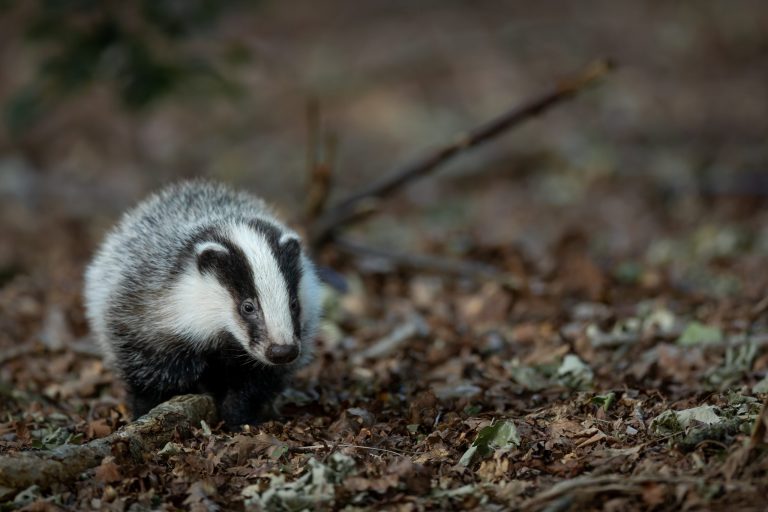
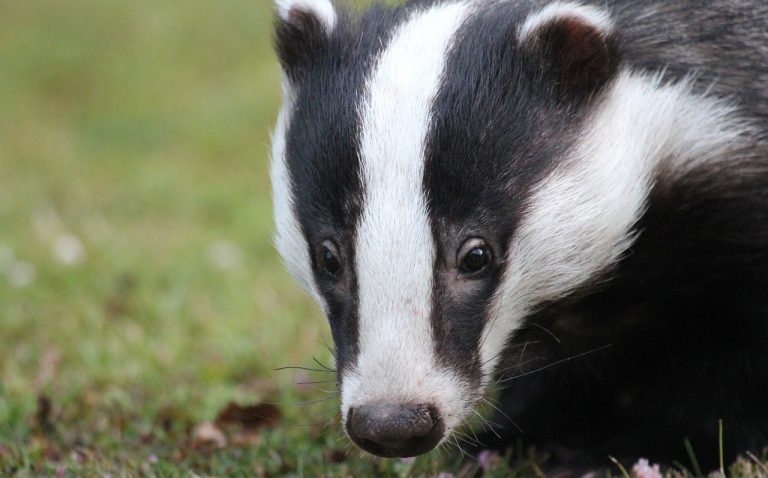
With their distinctive black and white striped face, this much loved iconic woodland animal is easily recognisable and often associated with the English countryside.
Elusive and nocturnal, they are relatively common throughout the UK, with the highest-density population in the South of England. They favour broad-leaf woodland and open countryside as their ideal habitat.
Male badgers are known as boars, and females are called sows, weighing in at around 11kgs and measuring 90cm in length when fully grown, making them the UK’s largest land predator.
Large, strong claws and their excellent sense of smell are used to help forage and dig for food. Badgers are omnivores and enjoy a wide-ranging diet, including small mammals, invertebrates, fruit, seeds, and eggs, with earthworms making up the bulk of their diet.
Their large claws mean they are the only native UK animal that can deal with the spikes of a hedgehog; badgers are not the hedgehog’s friend.
They are social creatures and live in groups called clans, usually comprised of seven badgers.
Each clan lives in a sett, a complex network of tunnels and dens. You can see if a sett is lived in as bedding material is scattered around the entrance.
In the spring and summer, they will dig out their setts, giving them a spring clean, which can be home to several generations.
In autumn, they will collect bedding materials to be used during the colder winter months and prepare the sett for the birth of the new cubs.
They can breed throughout the year (and are able to suspend the foetal development of cubs with delayed implantation; however, cubs are born between January and February after an average 49-day gestation period.
Once they have fully matured, when they reach around a year old, they may leave their sett to form their clan, which promotes genetic diversity.
They are omnivores with large appetites, eating a wide-ranging diet, including many invertebrates, slugs, insects and earthworms. They also enjoy fruit and eat small mammals, including hedgehogs and rabbits.
They are the largest land predator in the UK. Birds of prey and foxes will occasionally opportunistically eat badger cubs, but fully grown adults have no predators; however, disease, illegal hunting and cars are their main threats.
Badgers are fully protected under the Protection of Badgers Act 1992, making it an offence to commit any of the following:-
1. Taking, injuring or killing badgers.
2. Cruelty towards badgers, badger baiting.
3. Interfering with badger setts.
4. Selling and possession of live badgers.
5. Marking and ringing badgers.
As a result, their numbers have increased since this legislation was passed into law.
Advice on injured badgers
At present, we can’t provide rescue for injured badgers. Several local groups offer support and advice, including the Dorset Mammal Group and Wiltshire Badger Group.
Badgers are mostly nocturnal but can be seen during the day if they are searching for food.
Badgers are timid animals, and if you were to have an encounter with one, they may be injured or diseased. If you find an injured badger, approach cautiously, as badgers can be ferocious. They also have sharp, non-retractable claws.
A badger cub usually stays in its sett, only leaving with the adults. If you find one on its own, chances are it’s in trouble. Please don’t attempt to pick it up; observe its behaviour for a while. Call your local wildlife rescue centre for advice.
The law protects badgers and their setts; therefore, you must not disturb their habitat. Even if you think they might be injured, contact your local wildlife group to inform them of what you have seen; they can help.
Badgers often venture into rural environments; you may occasionally encounter them or hear stories about them entering gardens.
Badgers can eat wet cat or dog food and love fruit, including apples, plums or pears. They also enjoy Brazil nuts, unsalted peanuts, and root vegetables.
If you feed them, you will find them returning regularly; however, they are only sometimes a welcome visitor as their large claws can dig up a garden very quickly.