Hares
How to donate
Click below to donate to Animals' Voice and
help us open a wildlife rescue centre in the New Forest
Animals' Voice: Guide on Hares
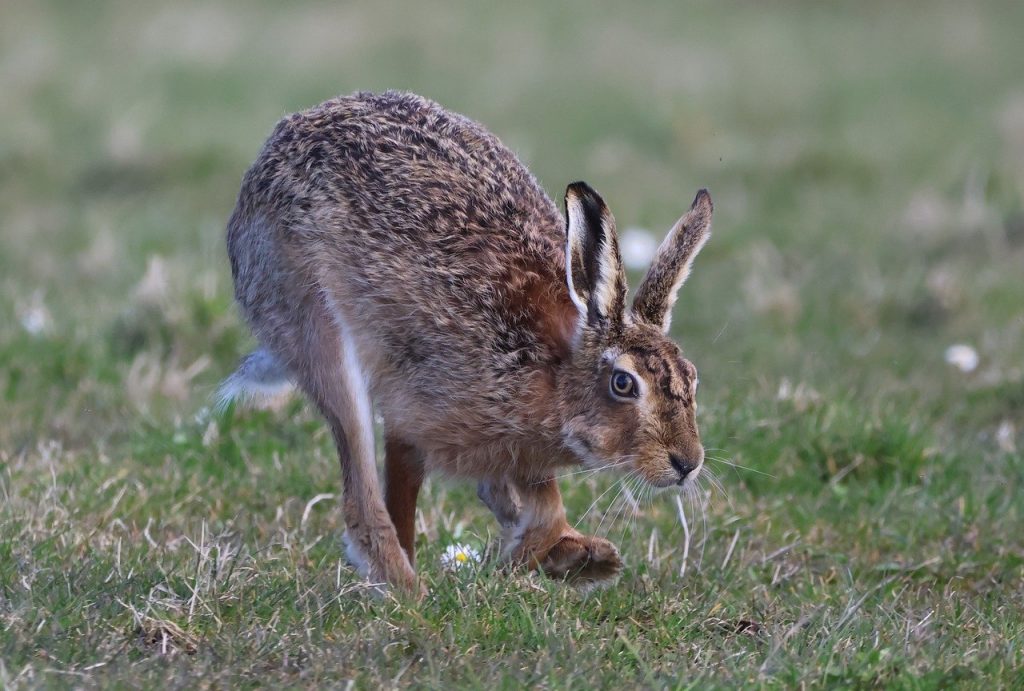
Light brown with orangey fur on and around the face, throat and flanks with a white underbelly the hare is often mistaken for a rabbit at first glance. That is until you see their distinctive long black-tipped ears and powerful long hind legs.
Male hares are called Jacks and females are Jills, they stand between 50-60cm, weigh 4-6kg and have incredibly long ears of around 10cm.
They mainly eat grasses and herbs, cereal crops when available, plus buds and twigs when times are hard. The hare will feed early in the morning and again at dusk.
These are the times when you are most likely to see them as they sit up and look around to make sure they are not being stalked.
They have brilliant hearing and a sense of smell, enabling them to detect predators easily. When foraging their movement is slow, so they remain unnoticed, keeping their ears flat along their back.
If disturbed, they will not immediately move or run away but lie perfectly still, hoping they will go unnoticed, however, should a predator come too near, it will leap up and run at full speed.
Their strong hind legs can see them realise speeds of around 35 miles per hour. Most will outrun and outwit their pursuers by swerving and zig-zagging across the fields.
Hares typically breed between January and October producing 2-4 litters each year, with the firstborn around March, continuing until October.
However, spring is the primary season for mating when you will see them frantically running around, leaping in the air, chasing each other, and boxing.
This behaviour is usually between a Jack and Jill, with the female refusing the advances of the male by giving him a slap!
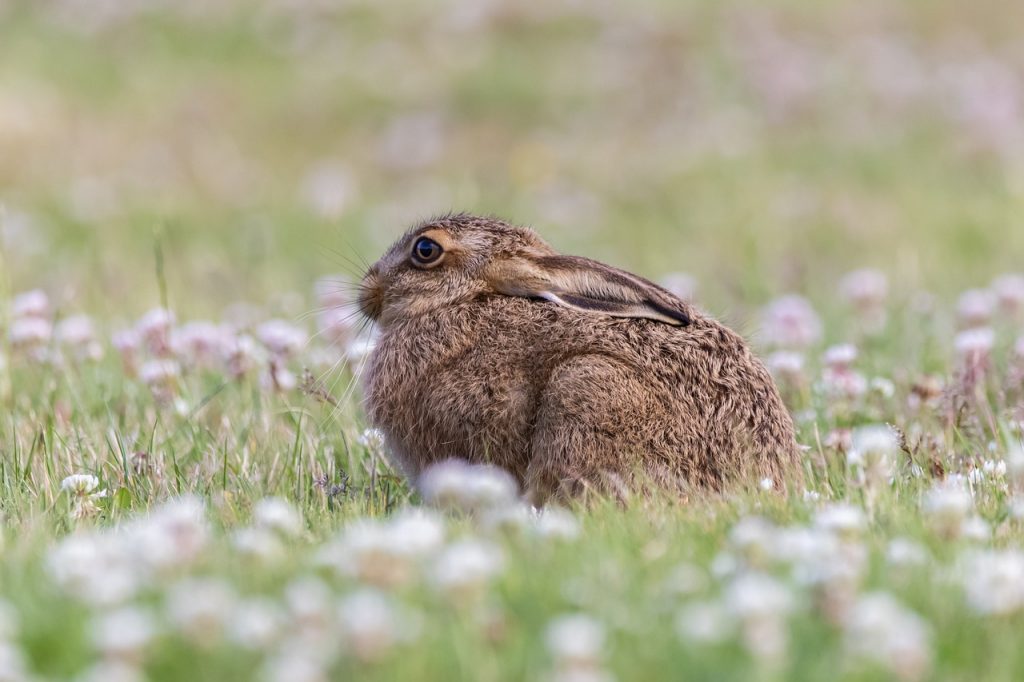
Young hares are called leverets and when born are fully furred and their eyes are open.
Young leverets can fall prey to foxes, stoats, buzzards and owls as they do not have the speed to avoid their predators.
Advice on injured hares / leverets
When the hare’s form is approached the young will not move hoping to avoid detection and this is why dogs will pick up young leverets. Please return them to the area found by your dog. Mother hares will always return to feed and nurture their young .
We have had many leverets brought to us by members of the public who have confused them with baby rabbits, the easiest way to tell them apart is the length of the ears which will lie flat down their back.
Unlike rabbits, hares will stay perfectly still, so people mistakenly pick them up assuming something is wrong when this is not the case. .
Hares are generally very nervous animals and run away as soon as people approach. If a hare isn’t moving and allows you to touch it, it’s a sign that something is wrong. If possible, wrap the animal in a warm towel and place it in a secure box.
Try and keep it away from other animals, children and noise, as hares are easily spooked and may try to escape.
Take it straight to your local wildlife rescue centre, don’t feed it or give it water.
If the leveret is injured, or unresponsive and cold then it needs help. Firstly wrap it in a towel or a jumper and place it in a box.
If you have a hot water bottle or wheat bag, warm it and place it in the box.
Don’t attempt to give it anything to eat or drink without seeking further advice hares require specialist care when being reared.
Seek out a rescue centre that has experience with leverets, they may already have some in their care which would be ideal as leverets have a better survival rate when in company.